Monday, October 15, 2012

The Bicycle in the Woods


When I was younger, I thought life would never be complete if I didn't do a lot of traveling in Europe and elsewhere around the globe; that it would at some point have to include riding a bicycle down a winding country road in Italy to a small village where I would stop at the market for fresh bread. Or, I would wake up in a canopied bed somewhere in the south of France with fields of lavender outside my window, far as the eye can see. Or, some morning I would find myself having breakfast in a canvas-covered tent with a giraffe looking over my shoulder on the plains of the Serengeti.  None of which I've yet to do. The wonderful thing I've discovered is that I don't have to do those things. I've done those things in my mind's eye and, having done so, something has come alive that cannot fade away: life can be well-lived right where I'm at.

Just a few days ago, I watched as a black squirrel made its way across the lawn again and again to hide acorns in the ground below the bird feeder. I suppose that seemed like a good place to hide them. He dug a little hole by scratching the dirt away, dropped the nut inside, then took his little paws and covered his cache, smoothed out the dirt and then fluffed the grass ( he actually fluffed the grass!), so as to hide it from others. Then, he brushed the dirt from his hands, literally, and then went back for another round of finding and hiding. I had never witnessed this before and found it absolutely fascinating. Do you see? I would not have been able to witness that if I was riding a bicycle in Tuscany, or sleeping soundly in Provence. I would be experiencing other things, but not that thing. And that thing was a thing of beauty - so simple, yet profound!

In a way, the world has come to my door. It's not the one I expected but it is the one I needed, the one that has brought me immeasurable peace.


"If I could give you one key, and one key only to a more abundant life, I would give you a sense of your own worth, an unshakable sense of your own dignity as one grounded in the source of the cosmic dance, as one who plays a unique part in the unfolding of the story of the world."

~ Greta Crosby


The photograph is mine.

Saturday, October 13, 2012

In Love with Solid Ground


"The Opening of Eyes"

That day I saw beneath dark clouds
the passing light over the water
and I heard the voice of the world speak out,
I knew then, as I had before,
life is no passing memory of what has been
nor the remaining pages in a great book
waiting to be read.

It is the opening of eyes long closed.
It is the vision of far off things
seen for the silence they hold.
It is the heart after years
of secret conversing
speaking out loud in the clear air.

It is Moses in the desert
fallen to his knees before the lit bush.
It is the man throwing away his shoes
as if to enter heaven
and finding himself astonished,
opened at last,
fallen in love with solid ground.


~ David Whyte


Photograph by Montucky who lives and hikes in western Montana. I encourage you to see the beauty of this world through his eyes: http://www.montucky.wordpress.com


Friday, October 12, 2012

Could We Just Dispense with Celebrating All Anniversaries?


The first time I recall seeing any mention of the Rolling Stones was on the cover of a magazine my friend, Kathy, absconded with from the back of her parent's grocery store. We went outside and pored over the story (but mostly the pictures), and my world of music, which had centered at that point around the country music I'd grown up with and a few groups like The Beatles, along with The Dave Clark Five and Herman's Hermits, suddenly expanded by leaps and bounds.

The first album I bought for myself was by the Rolling Stones. I wasn't giving up country music, I still sang along to "Crazy," by Patsy Cline and my feeble attempts at songwriting were always country flavored, but if anybody asked, I "listened" to the Stones.

Through the years, I still listened but never became a die-hard Stones fan. I liked many of their singles, but wasn't, by any stretch of the imagination, an album collector. Now, for some reason, I'm listening to this new song. It has the ring of the old stuff. In case you haven't been introduced, please allow me... It's not "Sympathy for the Devil," but I like it:


And where, pray tell, did those fifty years go?


Thursday, October 11, 2012

The Ballet Dancer in My Head


It's another gloomy day in north-central Minnesota and it appears my imagination has gained control of my thinking. I have been imagining that inside me is a ballerina, forty years younger and she's wearing a silvery tutu with a garland of flowers trailing from her waist (pardon me while I wipe these tears of laughter from my eyes). It does not matter one whit that I have never been a dancer. Well, nothing classical, that is.


Oh, yeah, I played around with modern dance back in college, wore my black leotard with bare feet and a fair amount of sincerity, now mixed with a smidgen of embarrassment that I might have actually thought that was a good idea. I looked okay in the leotard, and I liked the graceful movements, but pretending to be someone I was not was always an uncomfortable experience. So, a few weeks before the performance, I took my bows early and, as gracefully as I could, made my exit, made way for someone else to fill that spot who might actually have a chance of convincing herself she fit in with that little avant garde group.


This whole train of thought arrived via images of paintings by Degas I'd been looking at online, where I found myself again drawn to his dancers. I used to have one on my sidebar that I particularly liked. I also have a tin with a Degas image on its cover that once contained Stollwerck chocolates. I now use it for mending items such as needles and thread, and a few other miscellaneous objects that got placed inside and still reside there.


To wit: a small orange jewelry box that once contained a pair of blue moonstone earrings set in sterling silver, that the owners of the art gallery in Santa Fe gifted me with one evening as we were having dinner at Santacafe. I also have the matchbook of that particular cafe with a note on the inside cover reminding me of that fine evening, October 24, 2007.


But, back to the imaginary ballet going on in my head. It's not about the tutu, it's about The Dance. This crazy life seems to be always encouraging me to walk away from the wall and just dance. Because even when I'm sure I don't want to, without fail, once I get out on the floor it becomes easier. I just have to remember to stop trying to figure out all the steps in advance, stop trying to wrest control, and just let Life lead me. It knows what steps would be best for me, and it seems to have had infinite patience with my missteps.


Now, once again, we've paused together, Life and I, listened for the musical cue and entered back into the dance, perfectly in step, perfectly in time. Because none of us came into this world to be wallflowers, we came to dance. Every One of Us.


All images are Edgar Degas paintings.


Tuesday, October 9, 2012

The Nature of Distraction


When I read the poem, "San Francisco Remembered," earlier today, I couldn't help laughing out loud. The sweet honesty with which the poet shares his ability to be so easily distracted was most refreshing, his use of imagery to bring his main idea into focus again and again is the stuff out of which good writing is made. While sitting with it for a minute, I recalled a conversation I had recently with a friend in which we were talking about, among other things, Hank Thompson and his song, "The Wild Side of Life," which Kitty Wells answered with a song of her own, "It Wasn't God Who Made Honky Tonk Angels," way back in the before time, when country and western music was really country and western.

That prompted me, albeit in a rather roundabout fashion, to think in terms of an answer to this poem in the form of my own distractions. I'm not immune to such things. So, while I think about that and the approach I might take to this little exercise, you go ahead and read the poem. Perhaps you'll come up with some thoughts of your own along these lines.

But don't be looking for that post any time soon. You know, distractions and all ...


"San Francisco Remembered"

In summer the polleny light bounces off the white buildings
& you can see their spines & nerves & where the joints knot.
You've never seen such polleny light. The whole city shining
& the women wearing dresses so thin you could see their
wing-tipped hips & their tall silvery legs alone can knock
your eye out. But this isn't about women. It's about the city of
blue waters & fog so thick it wraps round your legs & leaves
glistening trails along the dark winding streets. Once I followed
such a trail & wound up beside this redheaded woman who
looked up & smiled & let me tell you you don't see smiles like
that in Jersey City. She was wearing a black raincoat with
two hundred pockets & I wanted to put my hands in each one.
But forget about her. I was talking about the fog which steps
up & taps your shoulder like a panhandler who wants bus fare
to a joint called The Paradise & where else could this happen?
On Sundays Golden Gate Park is filled with young girls strolling
the transplanted palms & imported rhododendron beds.
You should see the sunset in their eyes & the sway, the proud
sway of their young shoulders. Believe me, it takes a day or two
to recover. Or the trolleys clanking down the steep hills—
why you see legs flashing like mirrors! Please, Lord,
please let me talk about San Francisco. How that gorilla of a
bridge twists in the ocean wind & the earth turns under
your feet & at any moment the whole works can crack
& slip back into the sea like a giant being kicked off his raft
& now, if it's all right, I would like to talk about women …


~ Philip Schultz, from The God of Loneliness: Selected and New Poems, Houghton Mifflin, 2010


Monday, October 8, 2012

Love Is Still the Answer


It was almost spring, somewhere near the middle of March in 1966. I was almost 13. It was the end of basketball season and my sister and I were waiting for our dad to pick us up at a cafe downtown after the game. It was the first time I was allowed to wait where the older kids hung out. I was standing at the jukebox, listening to a Beatles song - I can't recall now which one, but I do know it was the Beatles - and hoping I was invisible, certainly feeling that I was. I might have been more outgoing than I remember, but what I remember is a very insecure kid hiding herself from the world, maybe even living inside her own world.

So, when I finally sat down in a booth and had pressed myself into the corner with my back to the door, why did Phil McKay, somewhat older new boy in town and a pretty good looking one at that, decide to sit down across from me and start talking music? And not just any music, but he had just left the jukebox where he'd played Barry McGuire's "Eve of Destruction," and he wanted to talk about the song, what it meant and what was happening in the world, the war in Vietnam, and for some reason he thought I would understand. I think we even had a conversation of sorts. It was a little scary, but kinda nice, to be talking about things that mattered.

Then Dad showed up.


One of the interesting bits of information I picked up today while thinking about Barry McGuire and his song, "Eve of Destruction," is that he changed the lyrics and it now includes the phrase, "Now think of all the hate still living inside us/it's never too late to let love guide us." I don't know if that's an improvement or not, because I like my anti-war songs to remain anti-war just as they were. But I do agree with the idea, the thought. Indeed, it is never too late to let love guide us.

And just what does Buddy have to do with all this? He came into this world knowing that love is the answer. To everything.


Saturday, October 6, 2012

Leaving the Dark Wood of Error


“If you could do it, I suppose, it would be a good idea to live your life in a straight line - starting, say, in the Dark Wood of Error, and proceeding by logical steps through Hell and Purgatory and into Heaven. Or you could take the King's Highway past the appropriately named dangers, toils, and snares, and finally cross the River of Death and enter the Celestial City. But that is not the way I have done it, so far. I am a pilgrim, but my pilgrimage has been wandering and unmarked. Often what has looked like a straight line to me has been a circling or a doubling back. I have been in the Dark Wood of Error any number of times. I have known something of Hell, Purgatory, and Heaven, but not always in that order. The names of many snares and dangers have been made known to me, but I have seen them only in looking back. Often I have not known where I was going until I was already there. I have had my share of desires and goals, but my life has come to me or I have gone to it mainly by way of mistakes and surprises. Often I have received better than I deserved. Often my fairest hopes have rested on bad mistakes. I am an ignorant pilgrim, crossing a dark valley. And yet for a long time, looking back, I have been unable to shake off the feeling that I have been led - make of that what you will.”

~ Wendell Berry


Painting by Cary Henrie, "Flight Distance"

Cary Henrie is another artist whose work we were fortunate enough to be able to represent at the gallery in Santa Fe. To see more of his work: http://www.caryhenrie.com


Thursday, October 4, 2012

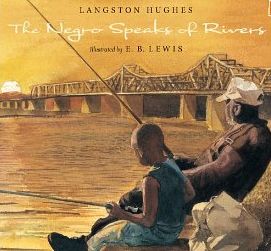
Compassion: That's Earl Lewis


One day, while I was sitting at the desk in the art gallery in Santa Fe, a man came in, looked around briefly and then stopped in front of the desk. As he stood in front of me, I had this odd sensation that I knew him, although I also knew we had never met previously in this life. It happens from time to time. It was a feeling  more than appearances that brought me to this mystical yet tangible conclusion. I can't be absolutely certain, as we never spoke of it, but I can say with a fair amount of certainty that he felt the same. You can just tell when that recognition takes place between two people who are open to it.

As he introduced himself, I also realized his name, Earl B. Lewis, sounded familiar, although I had no recollection of hearing it, or where I would have heard it. He was a watercolor artist and also a children's book illustrator of some note. Perhaps that explains that, but it doesn't explain the feeling I had. It was a feeling I experienced a few times in the gallery through the years. It was as though Santa Fe and that gallery was a meeting place for many people who were coming around again, back into each other's lives in a way that just seemed to be perfect for that time and place, that particular set of circumstances.


I was very fortunate to have a position in which the owners of the gallery trusted my responses to art and I was able to play a part in who was selected by the gallery for representation. As soon as I saw E.B.'s work, I knew it was something we should consider. Actually, for me, it would have been a done deal right there. The owners were more hesitant as we didn't deal often in the medium of watercolor. There seemed to be a more limited audience for this work. So, no decision was made. I was disappointed, and time went by.


About a year later, Earl stopped in again. For whatever reason, this time the owners agreed. It was time to bring Earl aboard, to represent him and his beautiful work. We would handle both the original illustrations for his books and other fine art as he made them available. I cannot tell you how happy I was. I can't explain it, but something was happening that was beyond what was happening. And, no, it was not a personal thing, although he is a beautiful man, no, it was something else.


Every summer we would have shows with receptions for the artists. Just before his shows, Earl would come to town with new paintings, resulting in an interesting evening with many sales of his work. Several people became so enamored they became collectors. I'm grateful for that for a number of reasons. Numbers playing a part, but also that nameless something that made me want to be a part of this artist's work and do all I could to bring it into the hands of others who would appreciate it, really see it the way I did.

One summer, Earl came in with several new paintings for his upcoming show that were based on homes he had visited that had once been on the Underground Railroad. They were going to be used in what we call a "coffee table book." As we set them around the perimeter of the room to view them, my eyes were drawn to one particular painting. Taken as a whole they were beyond moving, but this particular one took my breath away, quite literally. It was a painting with a view from inside a hiding place, looking out at the world just above it. It was simple and yet so powerful. An entire history of a people seemed contained in that one watercolor, that most ethereal of all mediums. Earl certainly must have known that this was an extraordinary body of work, and I suspect he knew what my response would be.


I was almost overcome with what I can only say was a belated sense of grief. There are no other words to describe my extremely visceral response. I had to walk out of the room to collect myself, but took only a minute to do so, realizing that this white chick, me, had better pull herself together. I wasn't sure I deserved to feel what I felt. Unless I did. As I walked back around the corner and into the room, Earl was waiting for me with an outstretched arm. He gently pulled me inside the crook of his arm and just held me there while I silently wept. He understood. We both did, for reasons that will forever be impossible to articulate. Sometimes, you just know.

While I was doing a little research online, finding images to include in this post, I ran across this video that tells you more than I can about the person Earl Lewis is, and illustrates this amazing new body of work he's done. Compassion. That's Earl Lewis. 


http://www.eblewis.com

Wednesday, October 3, 2012

Finding Our Way Into the Woods


Yesterday was another beautiful fall day. It looks like today will be, as well. If I'm starting to sound like a stuck record, I cannot offer an apology. Life in the country at a time of year such as this brings it out of me effortlessly and its beauty becomes my days. These are the days we will remember more as time goes by.

Last week, I spent some time with a friend, JB's son, who was visiting Minnesota from his new home in Alaska. He told me that he and his brother, who still lives in Minnesota, had gone out to the place where they had grown up, to the homestead that their dad had carved out of the woods, hoping to be able to walk the woods, look around a bit and maybe kindle some memories. They had a nice time out there, and it turned out to be a good idea.

It made me want to pay my own visit there, a place where I had spent a considerable amount of time back in the '90's while living at my farmhouse in Ansel. JB referred to his place as Bungo, as that was the name of the township it was in, named after a Native American chief from many years ago. It sits on the edge of the foothills, amid a state forest. My township was Ansel, on the other side of those foothills, which has nothing to do with Ansel Adams, although I had often wished it did. We were not the only ones who referred to where we lived in terms of townships. Living in the country allows for these more gentle demarcations of place.

So, I made my own pilgrimage, of sorts, a few days later, on another beauty of a fall day. When I pulled into the driveway, I was struck by how tall the trees had grown, how the place seemed enshrouded in yellow and gold, with a soft light that felt really good. Unfortunately, I had done this on the spur of the moment and had ignored the nudge I'd gotten to take my camera, but I walked around and got a sense of the place it had become. I had moments of sadness, but they were quickly replaced with great peace. I'm so glad I went.

Yesterday, I decided again to get in the car and drive back out there, this time with my camera. I had mentioned to JB on the phone that I had been out there and he was hoping for photos.  It also felt like a good way to get out and see more of the fall colors.

The day was fading, but enough sunlight was left to take some pictures and feel whatever it was I was going to feel. I was wondering if the energy I had felt the other day was the day itself, or the place. This idea of energy around a place intrigues me and I have wondered where it comes from. Is it the place or the energy we bring to it? I have no answer for that and maybe none is necessary, but when I arrived, the energy definitely still was there and although the trees had turned and many leaves had fallen, it was still awash in fall beauty.


As I walked around the corner of the house nearest the woods, I startled a deer that had been browsing back there. I seem to be startling deer lately, don't I?  Anyway, as he hightailed it out of there, I was filled with this sense of what was, what had been, and not just in Bungo, but throughout this country, and not so very long ago, when Native Americans lived here and across America, before the white man's agenda involving avarice and the gutting of a way of life that was once one with the natural world. It's not something I can think of for long periods of time.


JB had built this house in stages, starting in the mid-70's when many folks were attempting to do some homesteading, build their lives from the ground up. It took more than a few years to do so, starting with the stone foundation of the house, from stones gathered in the field and hauled into place. As he did so, he also built a small barn that housed a chicken coop with an outside run for them to peck and scratch, a place for his goats, which he milked and from which he made cheese, a rabbit hutch which had once housed many rabbits. He'd built a small pig barn with a state of the art fence enclosure for the pig to move about a bit more freely without escaping, until fall, when he would become food for the table. JB did his own killing and his own butchering. He knew where his food came from and his heat. He kept his woodsheds full. It was a lifestyle that was the antithesis of debt.


In late winter, early spring, when the sap would start running from the maples and the birch, he would tap the trees, with taps he'd made himself from wood on his land, and collect it to make syrup. He had a stone fireplace he'd built where he would boil it down over an open fire, the syrup in large pans above it. It was one of the many things he did to sustain his own life as free from outside influence or aggravation as possible. Many others also did so during this time, but it's not an easy life. Not many people are willing to live with an outhouse and all that implies. JB has more than once mentioned that he always had to dig a new hole for it in the summer when it was hot and the mosquitoes many. Now, they have been outlawed and many options for self-sufficiency removed, or made very difficult by The Powers That Be.

I am not mentioning all of this out of nostalgia. I'm rather fond of indoor plumbing. I'm mentioning it partly because of how very grateful I am for my land, here and now, and for all the possibilities inherent in it. But, being out in Bungo did make me think a bit more about what has happened, the course we all took to this place where we now find ourselves. The State of the Union, if you will.

You see, one of the reasons I was able to walk around his place so freely is that there is a sign on the door, a notice of foreclosure, and it is unoccupied. At least two families have come and gone from this place since JB left it in 1999, eventually answering the siren song of the SW. The latest family could not make it work for reasons unknown. Although, from what I saw inside, someone had done some fine remodeling and it is a shame they left in such a hurry. Pieces of their lives are still in there and will probably not be removed by loving hands.

Sadly, this is a story told over and over again, all across this country. Millions of people are unemployed. Millions of people have lost their homes. We are a country in shambles. If you are not aware of that, you should probably acquaint yourself with it. It's not the message of hope I normally like to bring to the table, but it is the truth, and I have to face it along with everybody else. Does this mean we are done for?  Not at all. It does mean we have to rethink how we are living, the choices we are making, and we should probably become a lot better prepared for the possibilities than most of us are.

Don't get me wrong. I'm still a hopeaholic, believing that good things will arise out of what must fall. Rebuilding will take imagination and effort. We are all more resilient, more capable, more skilled and talented than we've been led to believe. Out of this, great good can and will come. But, it's up to us. I've said it before and I am saying it again: provide your own hope. It isn't going to come from any government source and it isn't going to come from wishful thinking, with our heads in the sand.

It's time for a great awakening all across this land, almost past time. So, we'd better get crackin'.


Why do I have so much hope still? It comes from the messages I get from the universe telling me there is reason for great hope. My hope yesterday came in the form of two little raccoons who were sitting in the dry grass, just off the edge of the road as I approached JB's former driveway. They popped up together, reminding me of the two I lost, then ran down the ditch and into the corn field. Yes, raccoons like corn, but I know it was a message. And it was all the message I needed. 


What started my thinking along this track again this morning?
This post: http://www.coyoteprime-runningcauseicantfly.blogspot.com/2012/10/welcome-to-asylum-capitalism-ceaseless.html


Tuesday, October 2, 2012

Friendship is the Key to Life


Last evening, as I stepped outside to replenish the seed on the bird feeder, I startled and was startled by a yearling foraging under the crab apple trees. I saw it last night but wasn't aware it had returned. It ran a short way off as I tried to talk soothingly, reassuring it that all was well and I intended no harm. It stopped and watched as I turned the pail over and smoothed out the seeds across the feeder. As I was doing that, I heard the honking of geese and looked up to see them flying right overhead. The setting sun was lighting up their feathers underneath as they passed. I stood still, just feeling the world around me. The deer and the geese, together with the red, gold and green trees of autumn, all set against a deep blue sky, made it a perfect moment.


And now, this morning, my thoughts have turned to friendships, both old and new; those that have been around for a good long while, firm in their commitment, and those that seem to have disappeared, remaining only in kind but distant thoughts; those that have languished but are feeling a sense of revival even now in these days of autumn, and those that are burgeoning every day with a greater sense of purpose unfolding. I'm grateful for them all.


Someday many years from now
We'll sit beside the candles glow
Exchanging tales about our past
And laughing as the memories flow.
And when that distant day arrives
I know it will be understood
That friendship is the key to life
And we were friends and it was good.

~ Eileen Hehl


It appears I will never tire of photographing those trees beside the cabin. I have come to think of them, too, as good friends: they are solid and true yet always changing and evolving. They are entering a new phase even as I write this.


The photographs are mine.


Monday, October 1, 2012

Driving the Get-away Car


I like this Juan Bernal fellow, the man with the plan. I like his ... panache. In the end he was, in so many ways that matter, driving his own "get-away car."

Dedicated to Juan Bernal, died September 9, 2001, at age 41

I write a letter for my client today.
I sit with him on the deck
of the skilled nursing facility.
He eats breakfast, smokes cigarettes.
He wants me to write to his baby brother
                                  in jail doing time.
He dictates: "I love you
I need a thousand dollars
I will drive the get-away car."
He has these plans
he needs to convey—tells me
his little brother will tote the gun.

He dictates: "The doctor told me today
I am dying, but he doesn't know
how long it will take.
"

It is doubtful he will be able to drive
the get-away car when his legs are paralyzed
and two people have to transfer him
from his bed to his wheelchair and back.
He has a direct line morphine drip
he presses every ten minutes.

It is doubtful he will make it
home again, but he wants to go home.
He drifts in and out of sleep, nodding-out
his thoughts stop in mid-sentence,
he loses track of his message to his brother.

He asks if they'll read the letter.
The jail will, I say. He edits out the question
about whether his brother killed someone.
He thinks he did. I suggest he
take out the part about robbing a bank
but he doesn't. He thinks it's a good plan.

~ Julene Tripp Weaver


Ms. Weaver is an American poet living in Seattle where she works in HIV/AIDS services. She believes, as do I, "Time is more valuable than money."

Photograph by Jeff Barron, Moab, Utah.

Sunday, September 30, 2012

In My Attempts to Lift the Veil


Early this morning, while sitting at my table saying good morning in an email to a friend, I looked outside at the full moon that was still up just over the tree tops. In that same moment, I heard a flock of geese honking as they flew by under the light of the moon. It was not a bad way to start the day.

I've become quite obsessed with the always-changing light this time of year. It reached a fever pitch last year under the crab apple tree as I chased the light round and round, always seeing something new. If I stand in one spot for even a minute, the light will change several times. The leaves that are highlighted one moment become upstaged by the bark, which is busy filling in its rough edges with leftover light.


I learned  long ago that running for your camera at such moments is a waste of time. By the time you return, all you saw previously is gone, replaced by something else. Beautiful perhaps, but not that moment. Better to stand still and just look.


However, I have taken to keeping my camera in my pocket and am now attempting to have my cake and eat it, too.


I will sing for the veil that never lifts.
I will sing for the veil that begins, once in a lifetime,
   maybe, to lift.
I will sing for the rent in the veil.
I will sing for what is in front of the veil, the
   floating light.
I will sing for what is behind the veil -
   light, light, and more light.

~ Mary Oliver, The Leaf and the Cloud


Friday, September 28, 2012

Saying the Inadmissible


This poem doesn't seem to want to recede into my personal archives, but keeps reappearing. I like the poem, but am not certain why. Perhaps I like the idea of saying something inadmissible (actually, there's no perhaps about it), and I think kisses make pretty good oaths. Other than that, I'm not sure... But now, I feel I should post it. I don't know why. Perhaps I'll find out....

"The Rules of Evidence"

What you want to say most
is inadmissible.
Say it anyway.
Say it again.
What they tell you is irrelevant
can't be denied and will
eventually be heard.
Every question
is a leading question.
Ask it anyway, then expect
what you won't get.
There is no such thing
as the original
so you'll have to make do
with a reasonable facsimile.

The history of the world
is hearsay. Hear it.
The whole truth
is unspeakable
and nothing but the truth
is a lie.
I swear this.
My oath is a kiss.
I swear
by everything
incredible.


~ Lee Robinson


I took the photograph yesterday just because I liked the way the light was coming through the trees. It sure is pretty outside.


Thursday, September 27, 2012

Peas on Earth


Amy and I met shortly after I arrived in Santa Fe in the late fall of 2001. When we were introduced, I wasn't so sure I was going to like her. The first thing out of her mouth was about how my "accent" sounded like something right out of the movie, "Fargo." I silently took umbrage. I do not sound like a character from "Fargo," but I am from Minn-e-so-ta. Turns out, she was not the only person who would pick up on that. In time, I learned to ameliorate it through a greater awareness - cutting way back on my, "Yeah, you betcha's," - and we became fast friends, though she was sort of a city girl.

Born and bred on the east coast, in a family that had become wealthy but broken, she was still struggling with family issues when we met. They seemed to follow her around, nipping at her heels. We had many conversations about life with her father, otherwise known to her as "The Great Santini." I was invited to lunch with them once, when he was visiting Amy, and I saw things differently. But, perception is everything, I didn't grow up in their house, and Amy's perception seemed locked in around that issue. I only mention this because, well, it all seems tied to Amy's life, and, perhaps, even her passing.

Amy was a sculptress who created beautiful pieces using the theme of pea pods, naming her small company "Peas on Earth." She had an article in "Victoria," a magazine I had liked very much at one time, years before I met her, and she'd built a nice following to her work, often creating commissioned work such as a canopy bed for someone's daughter, or a garden bench for a mutual friend who lived just off Canyon Road. She created a line of jewelry and, to make ends meet, home decor items such as wall sconces, candle holders, and wine decanters. Just prior to her passing, a piece of her sculpture was added to the International Peace Garden on the border between the U.S. and Canada.


Before she arrived in New Mexico, she'd spent most of her adult life in New York City. She got her start by creating jewelry for herself and then for friends who inquired about it. One day, while on an elevator, someone from Cartier spotted her jewelry and she was invited aboard as an apprentice designer. I'll let Amy tell you a little more about that in her own words further on in this story.

At the time, she lived in the same neighborhood as John Gotti, a "family" man you might have heard of, and she mentioned that many times his guys would help her carry her groceries, always very polite and helpful. It was just one of the NYC stories she shared with me and I was all ears. She had some great stories.

We both liked to try a variety of cuisine and Santa Fe has no shortage of that. One day it would be Greek, another day Thai, and yet another day Himalayan or Vietnamese. It was a cornucopia. Because of her, I had my first cup of Turkish coffee. The best cup of coffee I have ever had. It comes in a very small cup and you only drink about 2/3 of it so as to avoid the grounds at the bottom. No sweetener, no cream, and it was absolutely delicious.

She possessed a joie de vivre that constantly amazed me, her sense of style always shining through. She could throw something on and be ready to go in no time at all. And she did it with no fear. Amy didn't keep the most organized house, but she did keep an interesting one. One day, we were getting ready to go someplace, she hadn't selected anything from her wardrobe yet and laundry day was way overdue, so she pulled a colorful vest from the pile, asked, "What do you think?" Then she put it on - backwards. It was perfect.

Her hair had turned silver at a young age, and so she had fun with it, often sporting a slash of pink among the silver. It was a combo that seemed to go with her style and her passion for life. One evening, as we sat at the Saigon Cafe, she handed me a small box. Inside was a brooch and a pair of earrings she had created for me: pea pods, with tendrils curling around them in an elegant earthiness, and an insect, sort of a pea pod praying mantis. I was thrilled and loved wearing them. The purse I'm displaying them on is one from my collection. I bought it at the Tesuque Flea Market, where we loved to go and just look around on the weekends. They once had matching slippers, which have since worn out.


She would haul stuff home from second hand stores or the Habitat for Humanity store and rework it into a great new piece of home decor, a hanging lamp or something. One day, we thought we'd go up to the Santa Rosa Reservoir in the hills above Chimayo. We both had a hankering to be near some water. We decided to take the road through Nambe. As we made the turn, we saw a white cabinet in the middle of the road. We stopped, she jumped out, hauled it in the car, examined it briefly, and then announced it was exactly what she had been looking for, for a project she was working on. See?  I'm not the only one.

She was one of those friends with whom you could share anything and she would listen without judgement or an inordinate amount of questions. We were both adult women and had lived our lives without a whole lot of hesitation. She was working on a screenplay loosely based on her life, and she talked of how we'd enter the world of film-making together, setting the industry on its ears with what we had to say. A lot of talk, but it sure was fun talk.

We talked about our times of loneliness and how we dealt with it, the little ways we'd found to combat it, when it wanted to tap at the edges of our consciousness. She had the practice of leaving the radio on at home, to a much-loved oldies station, and whenever she returned from being out and about, there it was, voices and that familiar, almost always happy music.

We shared a friendship just shy of three years, but we packed a lot into that time. Cancer seemed to come and go and just when we thought she had it licked, it reared its ugly head again. About the time I thought she was finally past it, I found out she was just keeping quiet about it. Maybe she wanted to protect me from the worst of it, or she just wanted to proceed on her own. One day, in the fall of 2005, her mother came to visit, told her it was time for her to come home to Saratoga Springs, in New York, and within a few days Amy had given away most of her things, made arrangements to move back east, and that's the last time I saw her.

We stayed in touch through letters and phone calls for a few months. She sent photographs of a lake in upstate New York she thought I'd like, with islands for camping, and encouraged me to visit as soon as possible. That was around Christmas time in 2005. A few weeks went by and I hadn't heard from her, so I called her number only to find it was no longer in service. I found her mother's number and called. Amy was already gone. She had passed in late January and her mother, not knowing me at all, had not contacted me. It was probably almost impossible news to deliver and I do understand.

After hearing the news, I found myself driving over to Second Street, where she had lived, walked down to her loft, thought about the day before she'd left, how I had walked away from her place with the sun shining so bright and warm, and yet knowing, on some very deep level, I would never see her again. That day, I barely held it together on my way to the car. When I returned to her place, after hearing of her passing, I sat in my car again and wept. Bitterly. It seemed unfair and it seemed unnecessary, and I had to take some time to adjust, learn to accept it.

It's taken me some time, but I think I have come to accept it, as much as one can accept the loss of a friend who brought so much to one's life. It's why I can write about her today. I have come to appreciate more and more the struggle she faced, how she fought to maintain a sense of normalcy, her deep love of life, and her ability to live each moment fully for whatever time remained. Her courage encourages me still. I'm even thinking of replacing those worn out velvet slippers with a brand new pair.


And now, I'd better pull myself together, because Buddy isn't used to seeing me cry and it's time to get on with this day. Maybe I'll wear my pea pod earrings and brooch around the house for a while and think of Amy. I can see her now: she's riding in a convertible through the streets of Paris, a man who loves her is by her side, just like all those years ago. She's happy, the sun is shining, and the wind is blowing through her beautiful pink and silver hair.


Here, in Amy's own words, from her brochure (please click to enlarge):


Postscript: As I was going through the memorabilia and brochures for this piece on Amy, I decided to look again at that last card she sent me, about five weeks before her passing. I hadn't looked at it for years, nor could I remember anything about it. Imagine my surprise when this is what I found. 


Yes, I believe she is telling me something. For those who might not remember this post, from March of last year, "Everything Lives Inside Us."

teresaevangeline.blogspot.com/2011/10/everything-lives-inside-us.html


Wednesday, September 26, 2012

Dreaming of Amy


Somewhere between 4:00 in the morning, when I first got up for the day, and now, sitting here a few hours later, I laid down on the couch, fell back asleep and dreamed. No, I don't do that often, but when I do, dreamland seems even more real, more accessible.

I was in a city that I've dreamed of before, but have never actually inhabited in this reality. I know this city only from my dreams. While there, early this morning, I inquired at the house of a landlady I knew in the city, remembering how much I had liked where I'd lived before and was hoping she still had that place or something similar available again. She did. And so I found myself back at my old apartment in an interesting old building, an apartment of hardwood floors and several rooms strung together with a long, inside hallway, each room with large windows overlooking the small city three stories below. I know these streets, have both walked and bicycled them many times, which is something I have never done in real life. The city has an old world feeling to it, but is in somewhat modern times. I stand at the windows looking down. I'm glad to be "home," again.

Then, I'm sitting at an outdoor table with my friend, Amy, who passed on several years ago. The sun is shining brightly and a man I know, but have never met in this life, is introducing me to two young men that we all know I've met before, but because this is a new dream we silently acknowledge this and introductions are knowingly made anyway. One of the young men, probably in his late 20's, has a thick shock of already graying hair and seems shy or maybe a bit unsure why we are being introduced again.  We all know each other already.

While walking by a busy pier of sorts, I see an old friend whom I've met in previous dreams, and only in dreams. We greet one another and are happy to see each other again. We then both move on, into the day and the dream as life is bustling right now and it feels good. The sun is shining and it's a beautiful day.

I could describe this friend to you, could even pick him out in a crowd, but haven't actually met him in this life. Perhaps we are yet to meet. That's happened you know, perhaps to you, too, this meeting people in dreams, seeing them so clearly and knowing them, and then they show up, sometimes years later, in this life.

That dream fades and my friend, Amy, and I are walking down a side street - it's autumn in Santa Fe - and we are making our way slowly to the Pink Adobe Cafe, a new and  smaller version of the older one that has recently opened next door for light lunches. We are going very slowly as Amy is showing signs of frailty and is feeling weak. We don't know that she will be gone from this life as we've known it in just a few short months. She is fighting hard to remain in this life she loves so much. We are fighting together for her, but fear sometimes creeps in and makes for awfully disquieting silences. We sit together in the silence and the sunlight that's pouring through the large glass doors near the table where we are sitting. The dream expands into pure light and I wake up.

Perhaps it's time to tell you about Amy. I've been keeping her story for the right time. I think you're going to like her as much as I did, and do.  More so, every day.

I'll be back tomorrow.


Monday, September 24, 2012

Mapping Sunlight Through the Trees


The sun is going down and I've just removed the laundry from the line. With the scent of autumn in the bed sheets I watch the last of the light filter through the trees. In the background I hear the hum of the refrigerator and think of how it must have felt to be a Native American, to always watch the world in quiet. No wonder they wanted so badly to keep this land exactly as it had always been. They surely knew that someday we'd be right here, right where we are ...


"A Map to the Next World"

for Desiray Kierra Chee

In the last days of the fourth world I wished to make a map for
those who would climb through the hole in the sky.

My only tools were the desires of humans as they emerged
from the killing fields, from the bedrooms and the kitchens.

For the soul is a wanderer with many hands and feet.

The map must be of sand and can’t be read by ordinary light. It
must carry fire to the next tribal town, for renewal of spirit.

In the legend are instructions on the language of the land,
how it was we forgot to acknowledge the gift, 
as if we were not in it or of it.

Take note of the proliferation of supermarkets and malls, the
altars of money. They best describe the detour from grace.

Keep track of the errors of our forgetfulness; the fog steals
our children while we sleep.

Flowers of rage spring up in the depression. Monsters are born
there of nuclear anger.

Trees of ashes wave good-bye to good-bye and the map
appears to disappear.

We no longer know the names of the birds here, how to speak
to them by their personal names.

Once we knew everything in this lush promise.

What I am telling you is real and is printed in a warning on the
map. Our forgetfulness stalks us, walks the earth behind us,
leaving a trail of paper diapers, needles, and wasted blood.

An imperfect map will have to do, little one.

The place of entry is the sea of your mother’s blood, your
father’s small death as he longs to know himself in another.

There is no exit.

The map can be interpreted through the wall of the intestine—
a spiral on the road of knowledge.

You will travel through the membrane of death, smell cooking
from the encampment where our relatives make a feast of fresh
deer meat and corn soup, in the Milky Way.

They have never left us; we abandoned them for science.

And when you take your next breath as we enter the fifth world
there will be no X, no guidebook with words you can carry.

You will have to navigate by your mother’s voice, renew the
song she is singing.

Fresh courage glimmers from planets.

And lights the map printed with the blood of history, a map you
will have to know by your intention, by the language of suns.

When you emerge note the tracks of the monster slayers where
they entered the cities of artificial light and killed what was killing us.

You will see red cliffs. They are the heart, contain the ladder.

A white deer will greet you when the last human climbs
from the destruction.

Remember the hole of shame marking the act of abandoning
our tribal grounds.

We were never perfect.

Yet, the journey we make together is perfect on this earth who 
was once a star and made the same mistakes as humans.

We might make them again, she said.

Crucial to finding the way is this: there is no beginning or end.

You must make your own map.


~ Joy Harjo


The photograph is mine.

Saturday, September 22, 2012

Boots and Middens


When I arrived in Santa Fe, back when the fall of '01 was heading into the winter of '02, one of the first things I did was attend a screening of "Endurance," a documentary about the Shackleton Expedition to the South Pole. It's an adventure that's always intrigued me. It was appearing at what became one of my favorite movie houses, then known as Plan B, a single screen with stadium style seats. It made for nice viewing in polite company.

While I was waiting in the lobby for the previous film to end a man approached me and started talking about the movie we were both going to see. Well, what was put in motion that night ended up being a nice friendship with many interesting dates. We saw Hal Holbrook as Mark Twain in Albuquerque, as well as a Russian ballet troupe performing a ballet based on "Spartacus." That's right. There were stringed quartets, symphonies and orchestras. We also watched and listened to Elizabeth Futral, a well-known soprano, sing a variety of arias at an auditorium in Los Alamos. It was very moving. A handsome, dark-haired man in front of us sat quietly, not moving a muscle, tears rolling down his cheeks.

But none of those events were our first date. No, our first date was going to the landfill together. It was actually a rather clever way to get things rolling. He had to make a trip there, he invited me along, and ever since I have used landfills to take care of my garbage instead of a truck picking it up at my house. It's way cheaper and I like to do it myself. You are aware, of course, that's where the garbage you have picked up every week goes, right? The stuff we don't recycle? It does not disappear into the truck and then the ether. It goes into the ground. One day, years hence, archaeologists are going to do some rather extensive digs around here and we're not going to look very good. We've taken the idea of a midden to a whole 'nother level.

Anyway. The landfill in Santa Fe - El Dorado, outside of Santa Fe, to be exact - was state of the art as landfills go. I paid twenty dollars for the year and that gave me ten trips, which was exactly right for me.

Time appearing to do what it does, another winter came along, I believe it was '07, not an "Endurance" kind of winter, but I needed a pair of snow boots for the first time since arriving there. All the winters had been very mild and basically snow-free. But this particular winter the snow came on New Year's Eve and didn't let up until late the next night thirty seven inches later. Plows are almost non-existent in New Mexico so we were snow bound for about five days.

In the meantime, we found rather creative ways to shovel snow. Friends up the road used the lid to their garbage can. I used a spade. In 30 minute increments and with the sun shining it wasn't half-bad; if you get into the rhythm, it moves along quite nicely. As a matter of fact, I kind of like shoveling snow as long as it doesn't get Sisyphus-like.

After arriving at some form of acceptance I knew it was time to get those winter boots. Ugly Uggs were very popular but I didn't want to spend the do-re-mi, so I just put it out there, not outlining what my boots should look like or when they should show up, although I mentioned that soon would be good. Where they would show up, of course, became the fun part.

Not long after I put that request out to the universe I had to make a trip to the landfill. When I was done throwing  the detritus of my life into the pit, as I was getting back in the car, something caught my eye near the big doors where sometimes people would put nicer things they thought someone might be able to use when their use for them had been exhausted. There my boots were, waiting for me, almost brand new, in that ubiquitous tan and size 11. Not exactly a usual woman's shoe size, but my size.


So you see, that first date had a purpose even if the subsequent ones didn't. Fun as they were. That's how I learned about the landfill. Funny how things get set in motion and where they take us.

Happy Autumnal Equinox. Here are the Moody Blues to help us welcome it:


Image: autumn at Lonewolf 2011.

Wednesday, September 19, 2012

Standing Inside the Rain


Well, I suppose I should follow my Hendrix story with my unrequited love for Richie Havens story. I don't think a Woodstock theme is emerging. Time will tell.

It began many years ago, as most memories seem to these days. It was in the '70's and I was watching a television talk show. Couldn't tell you now which one, but Richie was a guest. In the course of the conversation he mentioned that he could remember being nine months old and he described this memory to the interviewer. Not knowing much about Richie, my ears perked up and it made me want to pay closer attention. There was something about his presence, even through the television, that reached out and touched me in ways I couldn't explain. Later, I would describe it to myself as a spiritual presence that seemed to enshroud him, in a very gentle way. I wasn't into auras, it was a feeling. Every time I saw him on television or listened to his music, there it was, same feeling. It didn't go away.

Then, in October of 1992, a whole bunch of musicians got together at Madison Square Garden and celebrated thirty years of Bob Dylan's music. Neil Young dubbed it Bobfest and it stuck. It was shown on PBS and I think I still might have it on VHS. That was a while back, and won't be viewed again in that format. The main reason I wanted to hang onto and re-watch portions of it, on more than one occasion? Richie Havens. He performed Dylan's song, "Just Like a Woman." I was transfixed, repeatedly.

A few years later, word was received that Richie would be performing at a high school auditorium only thirty miles away. Tickets were promptly gotten. I may not have let them out of my sight. It was a night I had been waiting for many years. Our seats were about five rows back, left center. It was perfect.

I couldn't tell you now what was on his play list that night, but I do know how he ended it. Yep. "Just Like a Woman." He played and played and played those strings with such unbridled enthusiasm and joy that by the end of the song we were all on our feet. He jumped up, too, and finished it standing, with broken strings flying every which way. He wore a long white robe and if Jesus had been a guitar player I think that's what he would have looked like, maybe sounded like, too. It was an ecstatic moment and the best altar call ever.

A few months after that, I was hanging out with friends and talking to a guy named Lars about that night. He'd been there, too. Afterwards, he went around to the back of the auditorium to see if he could see him, you know, the same stuff I used to do, until I didn't. Maybe you did that once or twice yourself? Hmmmm? Well, not only did he get to meet him, but there was a pickup game of basketball on the outside courts and there was Richie in his long white robe, playing basketball. Lars was asked to join and so he did, naturally. He played basketball with Richie Havens.

I'm still jealous.

Here's Richie with, "Tupelo Honey," and, "Just Like a Woman," from 1974 ( a beautiful segue), followed by the Bobfest version. In the comments below one of the videos a viewer wrote, "He winds up from beneath his feet and casts his soul across the universe." Exactly so. I include both only because I can't get enough of Richie Havens, and they're both great. I couldn't decide, so I'm leaving it up to you.

I have to add: just as I decided on the title of this post, taken from the song, it started to rain for the first time in a long while.